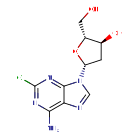
Cladribine is a purine antimetabolite used to treat Multiple Sclerosis (MS) and hairy cell leukemia. Cladribine is a purine analogue or a chlorinated derivative of adenine that causes apoptosis of B and T lymphocytes.
- Mechanism
- Curator reviewed · 14 references
Heightened activity of B and T lymphocytes have been implicated in the pathophysiology of hematological malignancies and MS. Cladribine is a purine nucleoside analog that closely resembles the molecular structure of deoxyadenosine. Upon uptake by dividing and nondividing lymphocytes via nucleoside transporter proteins, cladribine is converted intracellularly to cladribine triphosphate (Cd-ATP, 2-chlorodeoxyadenosine triphosphate) by deoxycytidine kinase and mitochondrial deoxyguanosine kinase. Because are high levels of deoxycytidine kinase and low levels of 5′-nucleotidase, an enzyme that inactivates Cd-ATP, in lymphocytes, Cd-ATP readily accumulates. Cd-ATP competes with adenine triphosphate in DNA synthesis, leading to DNA strand breaks. Ultimately, cladribine causes apoptosis or autophagy in dividing and resting lymphocytes.
Cladribine can also induce cytotoxicity via other mechanisms. It induces poly(ADP-ribose) polymerase (PARP), a DNA repair enzyme, that exhausts the intracellular levels of nicotinamide adenine dinucleotide (NAD) and adenosine triphosphate (ATP), thereby causing apoptotic cell death. Recent evidence shows that cladribine can trigger apoptosis by changing the mitochondrial transmembrane potential, allowing cytochrome c and apoptosis-inducing factor to move into the cytosol. This initiates apoptosis through both caspase-dependent and caspase-independent pathways.
- Primary indication
- Intravenous cladribine is indicated for the treatment of active Hairy Cell Leukemia as defined by clinically significant anemia, neutropenia, thrombocytopenia or disease-related symptoms.Curator reviewed · 5 structured indications
- Formula / weight
- C10H12ClN5O3 · 285.687 g/mol (avg)
- First approval
- Canada, 1997 · United States, 1993 · European Union, 2020
- Also known as
- 2-CdA · 2-chloro-2′-deoxy-adenosine · 2-chloro-deoxyadenosine · 2-Chlorodeoxyadenosine · 2CDA
- Code names
- RWJ-26251
- Brand names
Resolves to
PTOAARAWEBMLNO-KVQBGUIXSA-NSMILESNC1=C2N=CN([C@H]3C[C@H](O)[C@@H](CO)O3)C2=NC(Cl)=N1What you can answer from here — as of September 23, 2026
Which drugs share a target with Cladribine, and which of those have an active Phase 3 trial?
Create a free account or log in to explore the full data card.
Create Account