Hydralazine is an antihypertensive agent used for the management of essential hypertension or severe hypertension associated with conditions requiring immediate action, heart failure, and pre-eclampsia or eclampsia . Originally developed in the 1950s as a malaria treatment, hydralazine showed antihypertensive ability and was soon repurposed.
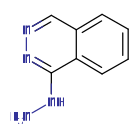
- Mechanism
- Curator reviewed · 7 references
Hydralazine may interfere with calcium transport in vascular smooth muscle by an unknown mechanism to relax arteriolar smooth muscle and lower blood pressure. The interference with calcium transport may be by preventing influx of calcium into cells, preventing calcium release from intracellular compartments, directly acting on actin and myosin, or a combination of these actions. This decrease in vascular resistance leads to increased heart rate, stroke volume, and cardiac output.
Hydralazine also competes with protocollagen prolyl hydroxylase (CPH) for free iron. This competition inhibits CPH mediated hydroxylation of HIF-1α, preventing the degradation of HIF-1α. Induction of HIF-1α and VEGF promote proliferation of endothelial cells and angiogenesis.
- Primary indication
- Hydralazine is indicated alone or adjunct to standard therapy to treat essential hypertension.Curator reviewed · 4 structured indications
- Formula / weight
- C8H8N4 · 160.1759 g/mol (avg)
- First approval
- Canada, 1997 · United States, 1953
- Also known as
- 1-Hydrazinophthalazine · 1-Phthalazinylhydrazine · 6-Hydralazine · Hydralazin · Hydralazine polistirex
- Code names
- MC-1101
- Brand names
Resolves to
RPTUSVTUFVMDQK-UHFFFAOYSA-NSMILESNNC1=NN=CC2=CC=CC=C12What you can answer from here — as of September 23, 2026
Which drugs share a target with Hydralazine, and which of those have an active Phase 3 trial?
Create a free account or log in to explore the full data card.
Create Account