Droperidol is a butyrophenone derivative and dopamine antagonist used to prevent and treat postoperative nausea and vomiting. A butyrophenone with general properties similar to those of haloperidol.
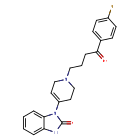
- Mechanism
- Curator reviewed
The exact mechanism of action is unknown, however, droperidol causes a CNS depression at subcortical levels of the brain, midbrain, and brainstem reticular formation. It may antagonize the actions of glutamic acid within the extrapyramidal system. It may also inhibit cathecolamine receptors and the reuptake of neurotransmiters and has strong central antidopaminergic action and weak central anticholinergic action. It can also produce ganglionic blockade and reduced affective response. The main actions seem to stem from its potent Dopamine(2) receptor antagonism with minor antagonistic effects on alpha-1 adrenergic receptors as well.
- Primary indication
- Droperidol is used to produce tranquilization and to reduce the incidence of nausea and vomiting in surgical and diagnostic procedures.Curator reviewed · 5 structured indications
- Formula / weight
- C22H22FN3O2 · 379.4274 g/mol (avg)
- First approval
- Canada, 1997 · United States, 1988
- Also known as
- Droperidolo
- Code names
- MCN-JR-4749 · R-4749
- Brand names
Resolves to
RMEDXOLNCUSCGS-UHFFFAOYSA-NSMILESFC1=CC=C(C=C1)C(=O)CCCN1CCC(=CC1)N1C(=O)NC2=CC=CC=C12What you can answer from here — as of October 17, 2026
Which drugs share a target with Droperidol, and which of those have an active Phase 3 trial?
Create a free account or log in to explore the full data card.
Create Account