Lomefloxacin is a fluoroquinolone used to prevent and treat a wide variety of infections in the body. Additionally, it has been employed for the prophylaxis of UTIs prior to surgery as well.
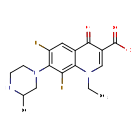
- Mechanism
- Curator reviewed
Lomefloxacin is a bactericidal fluoroquinolone agent with activity against a wide range of gram-negative and gram-positive organisms. The bactericidal action of lomefloxacin results from interference with the activity of the bacterial enzymes DNA gyrase and topoisomerase IV, which are needed for the transcription and replication of bacterial DNA. DNA gyrase appears to be the primary quinolone target for gram-negative bacteria. Topoisomerase IV appears to be the preferential target in gram-positive organisms. Interference with these two topoisomerases results in strand breakage of the bacterial chromosome, supercoiling, and resealing. As a result DNA replication and transcription is inhibited.
- Primary indication
- For the treatment of bacterial infections of the respiratory tract (chronic bronchitis) and urinary tract, and as a pre-operative prophylactic to prevent urinary tract infection caused by: S.pneumoniae, H.influenzae, S.aureus, P.aeruginosa, E. cloacae, P. mirabilis,...Curator reviewed · 7 structured indications
- Formula / weight
- C17H19F2N3O3 · 351.3479 g/mol (avg)
- First approval
- United States, 2006
- Also known as
- LFLX
- Brand names
Resolves to
ZEKZLJVOYLTDKK-UHFFFAOYSA-NSMILESCCN1C=C(C(O)=O)C(=O)C2=CC(F)=C(N3CCNC(C)C3)C(F)=C12What you can answer from here — as of September 23, 2026
Which drugs share a target with Lomefloxacin, and which of those have an active Phase 3 trial?
Create a free account or log in to explore the full data card.
Create Account