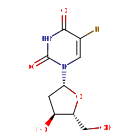
Floxuridine is an antimetabolite used as palliative management for liver metastases of gastrointestinal malignancy. An antineoplastic antimetabolite that is metabolized to fluorouracil when administered by rapid injection.
- Mechanism
- Curator reviewed
Floxuridine rapidly undergoes catabolism to form 5-fluorouracil, which is the active component of the drug. 5-Fluorouracil primarily works by interfering with DNA synthesis; however, it may also inhibit the formation of fraudulent RNA via physical incorporation into the RNA. It is also an inhibitor of riboside phophorylase, preventing the utilization of pre-formed uracil in RNA synthesis. Floxuridine can also form 5-fluoro-2'-deoxyuridine-5'-phosphate (FUDR-MP), which is the monophosphate of floxuridine that inhibits thymidylate synthetase that plays a role in the methylation of deoxyuridylic acid to thymidylic acid during DNA synthesis. FUDR-MP thus interferes with DNA synthesis.
- Primary indication
- For palliative management of gastrointestinal adenocarcinoma metastatic to the liver, when given by continuous regional intra-arterial infusion in carefully selected patients who are considered incurable by surgery or other means.Curator reviewed · 1 structured indication
- Formula / weight
- C9H11FN2O5 · 246.1924 g/mol (avg)
- First approval
- United States, 1970
- Also known as
- 5-Fluorodeoxyuridine · 5-FUdR · 5FDU · Deoxyfluorouridine · Fluorodeoxyuridine
- Code names
- NSC-27640 · WR-138720
Resolves to
ODKNJVUHOIMIIZ-RRKCRQDMSA-NSMILESOC[C@H]1O[C@H](C[C@@H]1O)N1C=C(F)C(=O)NC1=OWhat you can answer from here — as of September 26, 2026
Which drugs share a target with Floxuridine, and which of those have an active Phase 3 trial?
Create a free account or log in to explore the full data card.
Create Account