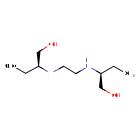
Ethambutol is an antituberculosis agent used in the prophylaxis and treatment of tuberculosis (TB). Ethambutol was first described in the literature in 1961.
- Mechanism
- Curator reviewed · 9 references
Ethambutol diffuses into Mycobacterium cells. Once inside the cell, ethambutol inhibits the arabinosyltransferases (embA, embB, and embC), preventing formation of the cell wall components arabinogalactan and lipoarabinomannan, and preventing cell division. Decreased concentrations of arabinogalactan in the cell wall reduces the number of binding sites for mycolic acid, leading to the accumulation of mycolic acid, trehalose monomycolate, and trehalose dimycolate. Lipoarabinomannan is a component of a cell surface molecule involved in the interaction with host cells. Reduced levels of lipoarabinomannan may interfere with mycobacterial interaction with host cells.
- Primary indication
- Ethambutol is indicated in combination with other anti-tuberculosis drugs in the treatment of pulmonary tuberculosis.Curator reviewed · 4 structured indications
- Formula / weight
- C10H24N2O2 · 204.3098 g/mol (avg)
- First approval
- Canada, 2019 · United States, 2001
- Also known as
- (S,S)-ethambutol · S,S-Ethambutol
- Brand names
Resolves to
AEUTYOVWOVBAKS-UWVGGRQHSA-NSMILESCC[C@@H](CO)NCCN[C@@H](CC)COWhat you can answer from here — as of September 23, 2026
Which drugs share a target with Ethambutol, and which of those have an active Phase 3 trial?
Create a free account or log in to explore the full data card.
Create Account