Solifenacin is a muscarinic antagonist with antispasmodic properties used to treat urge urinary incontinence, urgency, and urinary frequency associated with an overactive bladder. It has a long duration of action as it is usually taken once daily.
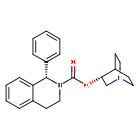
- Mechanism
- Curator reviewed · 4 references
Solifenacin is a competitive muscarinic receptor antagonist. It has the highest affinity for M3, M1, and M2 muscarinic receptors. 80% of the muscarinic receptors in the bladder are M2, while 20% are M3. Solifenacin's antagonism of the M3 receptor prevents contraction of the detrusor muscle, while antagonism of the M2 receptor may prevent contraction of smooth muscle in the bladder.
- Primary indication
- Solifenacin tablets are indicated to treat an overactive bladder with urinary incontinence, urgency, and frequency.Curator reviewed · 3 structured indications
- Formula / weight
- C23H26N2O2 · 362.473 g/mol (avg)
- First approval
- Canada, 2006 · United States, 2005
- Code names
- YM-67905 · YM-905
- Brand names
Resolves to
FBOUYBDGKBSUES-VXKWHMMOSA-NSMILESO=C(O[C@H]1CN2CCC1CC2)N1CCC2=CC=CC=C2[C@@H]1C1=CC=CC=C1What you can answer from here — as of September 23, 2026
Which drugs share a target with Solifenacin, and which of those have an active Phase 3 trial?
Create a free account or log in to explore the full data card.
Create Account