Tianeptine is an atypical tricyclic antidepressant with antidepressant and anxiolytic effects primarily used to treat major depressive disorder. Tianeptine is a drug used primarily in the treatment of major depressive disorder and has been studied in the treatment of irritable bowel syndrome (IBS).
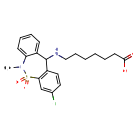
- Mechanism
- Curator reviewed · 21 references
Recent studies suggest that tianeptine acts as a full agonist at the mu-type opioid receptor (MOR). The mu opioid receptors are currently being studied as effective targets for antidepressant therapies. It is believed that the clinical effects of tianeptine are owed to its modulation of these receptors. In addition to its actions on the opioid receptor, previous studies have owed its action to its effect on the serotonin receptor, dopamine (D2/3) receptors, and glutamate receptors, as discussed below:
Tianeptine has challenged the monoaminergic hypothesis of depression, as well as the widely supported monoaminergic mechanisms whereby the action of most known antidepressants have been explained. Specifically, this drug is thought to persistently alter glutamate receptor bursting of the hippocampal CA3 commissural associational synapse. Current research suggests that tianeptine produces its antidepressant effects through the modulation of glutamate receptor activity (for example, AMPA receptors and NMDA receptors) and affect the release of brain-derived neurotrophic factor (BDNF), which impacts neural plasticity. More recent studies by support the role of tianeptine in the modulation of glutaminergic activity in the amygdala, the emotional region of the brain associated with memories.
Tianeptine reduces the hypothalamic-pituitary-adrenal response to stress, and thus prevents stress-related behavioral issues. In rodents, the stress of acute restraint increases extracellular levels of glutamate in the basolateral amygdala an effect that was inhibited by tianeptine. Interestingly, the SSRI fluoxetine increased extracellular glutamate levels in the basolateral amygdala regardless of stress conditions. These data demonstrate that the mechanism of action of tianeptine is distinct from SSRIs and support the hypothesis that the mechanism of action of tianeptine relates to alteration of glutaminergic activity in the amygdala and the hippocampus.
In addition to the above mechanisms, tianeptine is a unique antidepressant and anxiolytic medication that stimulates the uptake of serotonin (5-hydroxytryptamine; 5-HT), and 5-hydroxyindoleacetic acid (5-HIAA) in brain tissue.
Although the monoaminergic neurotransmitters serotonin (5-HT), noradrenaline (NA) and dopamine (DA) are proven to be related to the occurrence of depressive disorders, it is now recognized that monoamine deficits are not sufficient to explain the mechanism of action of antidepressant medications.
- Primary indication
- Used primarily in the treatment of major depressive disorder and anxiety.Curator reviewed · 1 structured indication
- Formula / weight
- C21H25ClN2O4S · 436.952 g/mol (avg)
Resolves to
JICJBGPOMZQUBB-UHFFFAOYSA-NSMILESCN1C2=CC=CC=C2C(NCCCCCCC(O)=O)C2=C(C=C(Cl)C=C2)S1(=O)=OWhat you can answer from here — as of August 30, 2026
Which drugs share a target with Tianeptine, and which of those have an active Phase 3 trial?
Create a free account or log in to explore the full data card.
Create Account