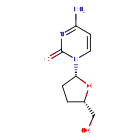
Zalcitabine is a dideoxynucleoside used to treat HIV. A dideoxynucleoside compound in which the 3'-hydroxyl group on the sugar moiety has been replaced by a hydrogen.
- Mechanism
- Curator reviewed
Zalcitabine is a nucleoside reverse transcriptase inhibitor (NRTI) with activity against Human Immunodeficiency Virus Type 1 (HIV-1). Within cells, zalcitabine is converted to its active metabolite, dideoxycytidine 5'-triphosphate (ddCTP), by the sequential action of cellular enzymes. ddCTP interferes with viral RNA-directed DNA polymerase (reverse transcriptase) by competing for utilization of the natural substrate deoxycytidine 5'-triphosphate (dCTP), as well as incorpating into viral DNA. Due to it's lack of a 3'-OH group, the formation of a 5' to 3' phosphodiester linkage that is necessary for DNA chain elongation is inhibited, thus leading to the termination of viral DNA growth.
- Primary indication
- For the treatment of Human immunovirus (HIV) infections in conjunction with other antivirals.Curator reviewed
- Formula / weight
- C9H13N3O3 · 211.2178 g/mol (avg)
- First approval
- Canada, 1992 · United States, 1992
- Also known as
- 2',3'-Dideoxycytidine · DDCYD · Dideoxycytidine
- Code names
- RO 24-2027/000
Resolves to
WREGKURFCTUGRC-POYBYMJQSA-NSMILESNC1=NC(=O)N(C=C1)[C@H]1CC[C@@H](CO)O1What you can answer from here — as of September 23, 2026
Which drugs share a target with Zalcitabine, and which of those have an active Phase 3 trial?
Create a free account or log in to explore the full data card.
Create Account