Linzagolix is a selective gonadotropin-releasing hormone (GnRH) receptor antagonist used for the symptomatic treatment of uterine fibroids. It has been studied for the treatment of estrogen-dependent conditions such as uterine fibroids and endometriosis.
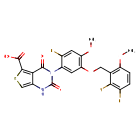
- Mechanism
- Curator reviewed · 2 references
Linzagolix is a selective antagonist of the gonadotropin-releasing hormone (GnRH) receptor. It binds competitively to GnRH receptors in the pituitary gland, thereby inhibiting endogenous signaling and, in turn, the hypothalamic-pituitary-gonadal axis. More specifically, this inhibition of GnRH signaling results in the suppression of both luteinizing hormone and follicle-stimulating hormone signaling, the latter of which is responsible for stimulating the production of estrogen in the ovaries. Linzagolix, therefore, indirectly suppresses estrogen production and signaling, making it useful in the management of estrogen-dependent conditions like uterine fibroids.
- Primary indication
- Linzagolix is indicated for the treatment of moderate to severe symptoms of uterine fibroids in adult women of reproductive age.Curator reviewed · 2 structured indications
- Formula / weight
- C22H15F3N2O7S · 508.42 g/mol (avg)
- First approval
- European Union, 2022
- Code names
- OBE-2109
- Brand names
Resolves to
BMAAMIIYNNPHAB-UHFFFAOYSA-NSMILESCOC1=C(COC2=C(OC)C=C(F)C(=C2)N2C(=O)NC3=CSC(C(O)=O)=C3C2=O)C(F)=C(F)C=C1What you can answer from here — as of September 23, 2026
Which drugs share a target with Linzagolix, and which of those have an active Phase 3 trial?
Create a free account or log in to explore the full data card.
Create Account