Alanine is an amino acid commonly found as a component of total parenteral nutrition. Alanine is a non-essential amino acid that occurs in high levels in its free state in plasma.
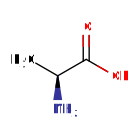
- Mechanism
- Curator reviewed
L-Alanine is a non-essential amino acid that occurs in high levels in its free state in plasma. It is produced from pyruvate by transamination. It is involved in sugar and acid metabolism, increases immunity, and provides energy for muscle tissue, brain, and the central nervous system. BCAAs are used as a source of energy for muscle cells. During prolonged exercise, BCAAs are released from skeletal muscles and their carbon backbones are used as fuel, while their nitrogen portion is used to form another amino acid, Alanine. Alanine is then converted to Glucose by the liver. This form of energy production is called the Alanine-Glucose cycle, and it plays a major role in maintaining the body's blood sugar balance.
- Primary indication
- Used for protein synthesis.Curator reviewed · 1 structured indication
- Formula / weight
- C3H7NO2 · 89.0932 g/mol (avg)
- First approval
- Canada, 1997 · United States, 1971
- Also known as
- (S)-alanine · L-alanine · L-alpha-Alanine
- Code names
- NSC-206315
- Brand names
Resolves to
QNAYBMKLOCPYGJ-REOHCLBHSA-NSMILESC[C@H](N)C(O)=OWhat you can answer from here — as of September 23, 2026
Which drugs share a target with Alanine, and which of those have an active Phase 3 trial?
Create a free account or log in to explore the full data card.
Create Account