Azithromycin is a macrolide antibiotic used to treat a variety of bacterial infections. Azithromycin is a broad-spectrum macrolide antibiotic with a long half-life and a high degree of tissue penetration.
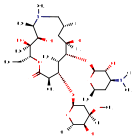
- Mechanism
- Curator reviewed · 5 references
In order to replicate, bacteria require a specific process of protein synthesis, enabled by ribosomal proteins. Azithromycin binds to the 23S rRNA of the bacterial 50S ribosomal subunit. It stops bacterial protein synthesis by inhibiting the transpeptidation/translocation step of protein synthesis and by inhibiting the assembly of the 50S ribosomal subunit. This results in the control of various bacterial infections. The strong affinity of macrolides, including azithromycin, for bacterial ribosomes, is consistent with their broad‐spectrum antibacterial activities.
Azithromycin is highly stable at a low pH, giving it a longer serum half-life and increasing its concentrations in tissues compared to erythromycin.
- Primary indication
- Azithromycin should be used only to treat or prevent infections that are proven or strongly suspected to be caused by susceptible bacteria in order to prevent the development antimicrobial resistance and maintain the efficacy of...Curator reviewed · 18 structured indications
- Formula / weight
- C38H72N2O12 · 748.9845 g/mol (avg)
- First approval
- Canada, 2005 · United States, 1994
- Code names
- CP-62,993 · DRG-0104 · XZ 405 · XZ-450
- Brand names
Resolves to
MQTOSJVFKKJCRP-BICOPXKESA-NSMILESCC[C@H]1OC(=O)[C@H](C)[C@@H](O[C@H]2C[C@@](C)(OC)[C@@H](O)[C@H](C)O2)[C@H](C)[C@@H](O[C@@H]2O[C@H](C)C[C@@H]([C@H]2O)N(C)C)[C@](C)(O)C[C@@H](C)CN(C)[C@H](C)[C@@H](O)[C@]1(C)OWhat you can answer from here — as of September 23, 2026
Which drugs share a target with Azithromycin, and which of those have an active Phase 3 trial?
Create a free account or log in to explore the full data card.
Create Account