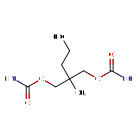
Meprobamate is an anxiolytic drug used for the short-term management of anxiety symptoms. A carbamate with hypnotic, sedative, and some muscle relaxant properties, although in therapeutic doses reduction of anxiety rather than a direct effect may be responsible for muscle relaxation.
- Mechanism
- Curator reviewed
Meprobamate's mechanism of action is not fully understood; in animal studies, meprobamate is reported to act at multiple sites in the central nervous system, such as the thalamus and limbic system. It binds to the GABAA receptors, leading to inhibitory effects on the neurons transmitting signals in the reticular formation and spinal cord. Consequently, effects such as sedation and altered perception of pain are observed.
- Primary indication
- For the management of anxiety disorders or for the short-term relief of the symptoms of anxiety.Curator reviewed · 2 structured indications
- Formula / weight
- C9H18N2O4 · 218.2502 g/mol (avg)
- First approval
- Canada, 1959 · United States, 1973
- Also known as
- Meprobamic acid
- Code names
- DEA No. 2820
- Brand names
Resolves to
NPPQSCRMBWNHMW-UHFFFAOYSA-NSMILESCCCC(C)(COC(N)=O)COC(N)=OWhat you can answer from here — as of September 23, 2026
Which drugs share a target with Meprobamate, and which of those have an active Phase 3 trial?
Create a free account or log in to explore the full data card.
Create Account