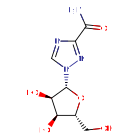
Ribavirin is a guanosine nucleoside used to treat some forms of Hepatitis C. Producing a broad-spectrum activity against several RNA and DNA viruses, Ribavirin is a synthetic guanosine nucleoside and antiviral agent that interferes with the synthesis of viral mRNA.
- Mechanism
- Curator reviewed · 5 references
Ribavirin is reported to have several mechanism of actions that lead to inhibition of viral RNA and protein synthesis. After activation by adenosine kinase to ribavirin mono-, di-, and triphosphate metabolites. Ribavirin triphosphate (RTP) is the predominant metabolite which directly inhibits viral mRNA polymerase by binding to the nucleotide binding site of the enzyme. This prevents the binding of the correct nucleotides, leading to a reduction in viral replication or to the production of defective virions. RTP also demonstrates an inhibitory action on viral mRNA guanylyltransferase and mRNA 2′-O-methyltransferase of dengue virus. Inhibition of these enzymes disrupts the posttranslational capping of the 5′ end of viral mRNA through ribavirin being incorporated at the 5′ end in place of guanosine and preventing the cap methylation step.
Inhibition of host inosine monophosphate dehydrogenase (IMPDH) and subsequent depletion of GTP pool is proposed to be another mechanism of action of ribavirin. IMPDH catalyzes the rate-limiting step where inosine 5′-monophosphate is converted to xanthine monophosphate during guanosine monophosphate (GMP) synthesis. GMP is later converted to guanosine triphoshpate (GTP). Ribavirin monophosphate mimics inosine 5′-monophosphate and acts as a competitive inhibitor of IMPDH. Inhibited de novo synthesis of guanine nucleotides and decreased intracellular GTP pools leads to a decline in viral protein synthesis and limit replication of viral genomes.
Ribavirin acts as a mutagen in the target virus to cause an 'error catastrophe' due to increased viral mutations. RTP pairs with cytidine triphosphate or uridine triphosphate with equal efficiency and to block HCV RNA elongation. It causes premature termination of nascent HCV RNA and increases mutagenesis by producing defective virions.
Ribavirin also exerts an immunomodulatory action of the host to the virus by shifting a Th2 response in favor of a Th1 phenotype. Th2 response and production of type 2 cytokines such as IL-4, IL-5, and IL-10 stimulates the humoral response which enhances immunity toward the virus. Ribavirin enhanced induction of interferon-related genes, including the interferon-α receptor, and down-regulation of genes involved in interferon inhibition, apoptosis, and hepatic stellate cell activation in vitro.
- Primary indication
- Indicated for the treatment of chronic Hepatitis C virus (HCV) infection in combination with other antiviral agents with the intent to cure or achieve a sustained virologic response (SVR).Curator reviewed · 3 structured indications
- Formula / weight
- C8H12N4O5 · 244.2047 g/mol (avg)
- First approval
- Canada, 1999 · United States, 1986
- Also known as
- Tribavirin
- Code names
- ICN-1229 · SCH-18908
- Brand names
Resolves to
IWUCXVSUMQZMFG-AFCXAGJDSA-NSMILESNC(=O)C1=NN(C=N1)[C@@H]1O[C@H](CO)[C@@H](O)[C@H]1OWhat you can answer from here — as of September 23, 2026
Which drugs share a target with Ribavirin, and which of those have an active Phase 3 trial?
Create a free account or log in to explore the full data card.
Create Account