Doxycycline is a tetracycline antibiotic used to treat a wide variety of bacterial infections. Doxycycline is a broad-spectrum antibiotic synthetically derived from oxytetracycline.
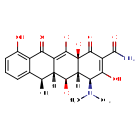
- Mechanism
- Curator reviewed · 7 references
Protein synthesis is essential for survival and functioning of cells, including bacteria. Doxycycline inhibits bacterial protein synthesis by allosterically binding to the 30S prokaryotic ribosomal subunit. The drug blocks the association charged aminoacyl-tRNA (aa-tRNA) with the ribosomal A site, which is the acceptor site on the mRNA-ribosome complex. Doxycycline ultimately impedes the elongation phase of protein synthesis and halts the production of essential proteins for bacterial survival and functioning.
Doxycycline mediates anti-inflammatory actions by preventing calcium-dependent microtubular assembly and lymphocytic proliferation, thereby inhibiting leukocyte movement during inflammation. It also inhibits nitric oxide synthase, which is an enzyme that produces nitric oxide, an inflammatory signaling molecule.
- Primary indication
- Doxycycline is indicated for the treatment of various infections by gram-positive and gram-negative bacteria, aerobes and anaerobes, as well other types of bacteria, including: Early Lyme disease (as evidenced by erythema migraines) due to Borrelia...Curator reviewed · 33 structured indications
- Formula / weight
- C22H24N2O8 · 444.4346 g/mol (avg)
- First approval
- Canada, 1996 · United States, 1967
- Also known as
- DOXY
- Code names
- Doxy-100
- Brand names
Resolves to
JBIWCJUYHHGXTC-AKNGSSGZSA-NSMILES[H][C@@]12[C@@H](C)C3=CC=CC(O)=C3C(=O)C1=C(O)[C@]1(O)C(=O)C(C(N)=O)=C(O)[C@@H](N(C)C)[C@]1([H])[C@H]2OWhat you can answer from here — as of September 23, 2026
Which drugs share a target with Doxycycline, and which of those have an active Phase 3 trial?
Create a free account or log in to explore the full data card.
Create Account