Naltrexone is a narcotic antagonist used in opioid overdose. Derivative of noroxymorphone that is the N-cyclopropylmethyl congener of naloxone.
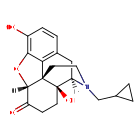
- Mechanism
- Curator reviewed
Naltrexone is a pure opiate antagonist and has little or no agonist activity. The mechanism of action of naltrexone in alcoholism is not understood; however, involvement of the endogenous opioid system is suggested by preclinical data. Naltrexone is thought to act as a competitive antagonist at mc, κ, and δ receptors in the CNS, with the highest affintiy for the μ receptor. Naltrexone competitively binds to such receptors and may block the effects of endogenous opioids. This leads to the antagonization of most of the subjective and objective effects of opiates, including respiratory depression, miosis, euphoria, and drug craving. The major metabolite of naltrexone, 6-β-naltrexol, is also an opiate antagonist and may contribute to the antagonistic activity of the drug.
- Primary indication
- Used as an adjunct to a medically supervised behaviour modification program in the maintenance of opiate cessation in individuals who were formerly physically dependent on opiates and who have successfully undergone detoxification.Curator reviewed · 9 structured indications
- Formula / weight
- C20H23NO4 · 341.4009 g/mol (avg)
- First approval
- Canada, 2015 · United States, 1998 · European Union, 2020
- Code names
- EN-1639 A · PTI-901 · UM 792
- Brand names
Resolves to
DQCKKXVULJGBQN-XFWGSAIBSA-NSMILES[H][C@@]12OC3=C(O)C=CC4=C3[C@@]11CCN(CC3CC3)[C@]([H])(C4)[C@]1(O)CCC2=OWhat you can answer from here — as of September 23, 2026
Which drugs share a target with Naltrexone, and which of those have an active Phase 3 trial?
Create a free account or log in to explore the full data card.
Create Account