Asciminib is an inhibitor of ABL/BCR-ABL1 tyrosine kinase for the treatment of patients with Philadelphia chromosome-positive CML, including those with the T315I mutation. More specifically, it is an inhibitor of the ABL1 kinase activity of the BCR-ABL1 fusion protein which serves as a driver of CML proliferation in most patients with the disease.
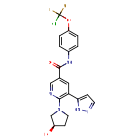
- Mechanism
- Curator reviewed · 6 references
In most patients with chronic myeloid leukemia (CML), progression of the disease is driven primarily by a translocation of the Philadelphia chromosome that creates an oncogenic fusion gene, BCR-ABL1, between the BCR and ABL1 genes. This fusion gene produces a resultant fusion protein, BCR-ABL1, which exhibits elevated tyrosine kinase and transforming activities that contribute to CML proliferation.
Asciminib is an allosteric inhibitor of the BCR-ABL1 tyrosine kinase. It binds to the myristoyl pocket of the ABL1 portion of the fusion protein and locks it into an inactive conformation, preventing its oncogenic activity.
- Primary indication
- Asciminib is indicated for the treatment of adult patients with Philadelphia chromosome-positive chronic myeloid leukemia (Ph+ CML) in chronic phase who have been previously treated with ≥2 tyrosine kinase inhibitors.Curator reviewed · 3 structured indications
- Formula / weight
- C20H18ClF2N5O3 · 449.84 g/mol (avg)
- First approval
- Canada, 2022 · United States, 2021 · European Union, 2022
- Code names
- ABL-001 · ABL001-NX · NVP-ABL001
- Brand names
Resolves to
VOVZXURTCKPRDQ-CQSZACIVSA-NSMILESO[C@@H]1CCN(C1)C1=C(C=C(C=N1)C(=O)NC1=CC=C(OC(F)(F)Cl)C=C1)C1=CC=NN1What you can answer from here — as of October 21, 2026
Which drugs share a target with Asciminib, and which of those have an active Phase 3 trial?
Create a free account or log in to explore the full data card.
Create Account