Amphotericin B is an antifungal used to treat fungal infections in neutropenic patients, cryptococcal meningitis in HIV infection, fungal infections, and leishmaniasis. Amphotericin B shows a high order of in vitro activity against many species of fungi.
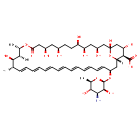
- Mechanism
- Curator reviewed
Amphotericin B is fungistatic or fungicidal depending on the concentration obtained in body fluids and the susceptibility of the fungus. The drug acts by binding to sterols (ergosterol) in the cell membrane of susceptible fungi. This creates a transmembrane channel, and the resultant change in membrane permeability allowing leakage of intracellular components. Ergosterol, the principal sterol in the fungal cytoplasmic membrane, is the target site of action of amphotericin B and the azoles. Amphotericin B, a polyene, binds irreversibly to ergosterol, resulting in disruption of membrane integrity and ultimately cell death.
- Primary indication
- Used to treat potentially life threatening fungal infections.Curator reviewed · 34 structured indications
- Formula / weight
- C47H73NO17 · 924.079 g/mol (avg)
- First approval
- Canada, 2006 · United States, 1966
- Also known as
- AMPH-b · amphotericine B · Liposomal amphotericin B
- Code names
- NSC-527017 · RP 17774
- Brand names
Resolves to
APKFDSVGJQXUKY-INPOYWNPSA-NSMILES[H][C@]12C[C@@H](O[C@@H]3O[C@H](C)[C@@H](O)[C@H](N)[C@@H]3O)\C=C\C=C\C=C\C=C\C=C\C=C\C=C\[C@H](C)[C@@H](O)[C@@H](C)[C@H](C)OC(=O)C[C@H](O)C[C@H](O)CC[C@@H](O)[C@H](O)C[C@H](O)C[C@](O)(C[C@H](O)[C@H]1C(O)=O)O2What you can answer from here — as of September 23, 2026
Which other approved drugs treat the same conditions as Amphotericin B, and which companies have late-stage candidates in those indications?
Create a free account or log in to explore the full data card.
Create Account