Dimenhydrinate is a medication used to prevent and treat nausea, vomiting, vertigo, and motion sickness. Dimehydrinate was first described in the literature in 1949, and patented in 1950.
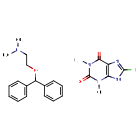
- Mechanism
- Curator reviewed · 4 references
Dimenhydrinate is a theoclate salt that separates into diphenhydramine and 8-chlorotheophylline. While the exact mechanism of action is unknown, diphenhydramine is theorized to reduce disturbances to equilibrium through antimuscarinic effects or histamine H1 antagonism. 8-chlorotheophylline may produce excitation through blocking adenosine receptors, reducing the drowsiness produced by diphenhydramine.
- Primary indication
- Dimenhydrinate is indicated for the prevention and treatment of nausea, vomiting, or vertigo of motion sickness.Curator reviewed · 22 structured indications
- Formula / weight
- C24H28ClN5O3 · 469.97 g/mol (avg)
- First approval
- Canada, 2000 · United States, 2004
- Also known as
- Diphenhydramine theoclate
- Brand names
Resolves to
NFLLKCVHYJRNRH-UHFFFAOYSA-NSMILESCN1C2=C(N=C(Cl)N2)C(=O)N(C)C1=O.CN(C)CCOC(C1=CC=CC=C1)C1=CC=CC=C1What you can answer from here — as of September 23, 2026
Which drugs share a target with Dimenhydrinate, and which of those have an active Phase 3 trial?
Create a free account or log in to explore the full data card.
Create Account