Quetiapine is an atypical antipsychotic agent used for the management of bipolar disorder, schizophrenia, and major depressive disorder. Quetiapine demonstrates a high level of therapeutic efficacy and low risk of adverse effects during long-term treatment.
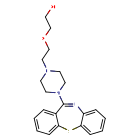
- Mechanism
- Curator reviewed · 3 references
Although the mechanism of action of quetiapine is not fully understood, several proposed mechanisms exist. In schizophrenia, its actions could occur from the antagonism of dopamine type 2 (D2) and serotonin 2A (5HT2A) receptors. In bipolar depression and major depression, quetiapine's actions may be attributed to the binding of this drug or its metabolite to the norepinephrine transporter. Additional effects of quetiapine, including somnolence, orthostatic hypotension, and anticholinergic effects, may result from the antagonism of H1 receptors, adrenergic α1 receptors, and muscarinic M1 receptors, respectively.
- Primary indication
- Quetiapine is used in the symptomatic treatment of schizophrenia.Curator reviewed · 10 structured indications
- Formula / weight
- C21H25N3O2S · 383.507 g/mol (avg)
- First approval
- Canada, 2000 · United States, 1997
- Code names
- N05AH04
- Brand names
Resolves to
URKOMYMAXPYINW-UHFFFAOYSA-NSMILESOCCOCCN1CCN(CC1)C1=NC2=CC=CC=C2SC2=CC=CC=C12What you can answer from here — as of September 23, 2026
Which drugs share a target with Quetiapine, and which of those have an active Phase 3 trial?
Create a free account or log in to explore the full data card.
Create Account