Lorazepam is a short-acting benzodiazepine commonly used to treat panic disorders, severe anxiety, and seizures. It was developed by DJ Richards, presented and marketed initially by Wyeth Pharmaceuticals in the USA in 1977.
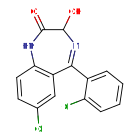
- Mechanism
- Curator reviewed · 2 references
Lorazepam allosterically binds on the benzodiazepine receptors in the post-synaptic GABA-A ligand-gated chloride channel in different sites of the central nervous system (CNS). This binding will result in an increase on the GABA inhibitory effects which is translated as an increase in the flow of chloride ions into the cell causing hyperpolarization and stabilization of the cellular plasma membrane.
According to the binding site of lorazepam, we can observe different activities as the binding in the amygdala is known to help mainly in anxiety disorders while the binding in the cerebral cortex helps in seizure disorders.
- Primary indication
- Lorazepam is FDA-approved for the short-term relief of anxiety symptoms related to anxiety disorders and anxiety associated with depressive symptoms such as anxiety-associated insomnia.Curator reviewed · 15 structured indications
- Formula / weight
- C15H10Cl2N2O2 · 321.158 g/mol (avg)
- First approval
- Canada, 1999 · United States, 1980
- Also known as
- o-Chlorooxazepam · o-Chloroxazepam
- Code names
- WY-4036
- Brand names
Resolves to
DIWRORZWFLOCLC-UHFFFAOYSA-NSMILESOC1N=C(C2=CC=CC=C2Cl)C2=C(NC1=O)C=CC(Cl)=C2What you can answer from here — as of September 23, 2026
Which drugs share a target with Lorazepam, and which of those have an active Phase 3 trial?
Create a free account or log in to explore the full data card.
Create Account