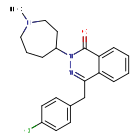
Azelastine is a histamine H1-receptor antagonist used intranasally to treat allergic and vasomotor rhinitis and in an ophthalmic solution to treat allergic conjunctivitis. It is a racemic mixture, though there is no noted difference in pharmacologic activity between enantiomers, and was first granted FDA approval in 1996.
- Mechanism
- Curator reviewed · 12 references
Azelastine is primarily a selective antagonist of histamine H1-receptors, with a lesser affinity for H2-receptors, used for the symptomatic treatment of allergies. Histamine H1-receptors are G-protein-coupled receptors with 7 transmembrane spanning domains that are found on nerve endings, smooth muscle cells, and glandular cells. Following allergen exposure in sensitized individuals, IgE-receptor cross-linking on mast cells results in the release of histamine, which binds to H1-receptors and contributes to typical allergic symptoms such as itching, sneezing, and congestion.
Though its primary mode of action is thought to be via H1-receptor antagonism, azelastine (like other second-generation antihistamines) appears to affect other mediators of allergic symptomatology. Azelastine has mast cell-stabilizing properties that prevent the release of interleukin-6, tryptase, histamine, and TNF-alpha from mast cells, and has been shown to reduce mediators of mast cell degranulation such as leukotrienes in the nasal lavage of patients with rhinitis, as well as inhibiting their production and release from eosinophils (potentially via inhibition of phospholipase A2 and leukotriene C4 synthase). Additionally, patients using oral azelastine were observed to have significantly reduced concentrations of substance P and bradykinin in nasal secretions, both of which may play a role in nasal itching and sneezing in patients with allergic rhinitis.
- Primary indication
- Intranasal azelastine is indicated for the symptomatic treatment of seasonal allergic rhinitis in patients 5 years and older and for the symptomatic treatment of vasomotor rhinitis in patients 12 years and older.Curator reviewed · 18 structured indications
- Formula / weight
- C22H24ClN3O · 381.898 g/mol (avg)
- First approval
- Canada, 2017 · United States, 1996
- Brand names
Resolves to
MBUVEWMHONZEQD-UHFFFAOYSA-NSMILESCN1CCCC(CC1)N1N=C(CC2=CC=C(Cl)C=C2)C2=CC=CC=C2C1=OWhat you can answer from here — as of September 23, 2026
Which drugs share a target with Azelastine, and which of those have an active Phase 3 trial?
Create a free account or log in to explore the full data card.
Create Account