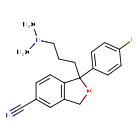
Citalopram is a selective serotonin reuptake inhibitor (SSRI) used in the treatment of depression. Citalopram is an antidepressant belonging to the class of selective serotonin-reuptake inhibitors (SSRIs) widely used to treat the symptoms of depression.
- Mechanism
- Curator reviewed · 3 references
The mechanism of action of citalopram is unclear but is presumed to be related to potentiation of serotonergic activity in the central nervous system (CNS) resulting from its inhibition of CNS neuronal reuptake of serotonin (5-HT), potentially through the inhibition of the serotonin transporter (solute carrier family 6 member 4, SLC6A4).
Citalopram binds with significantly less affinity to histamine, acetylcholine, and norepinephrine receptors than tricyclic antidepressant drugs. Particularly, citalopram has no or very low affinity for 5-HT1A, 5-HT2A, dopamine D1 and D2, α1-, α2-, and β-adrenergic, histamine H1, gamma aminobutyric acid (GABA), muscarinic cholinergic, and benzodiazepine receptors.
- Primary indication
- Citalopram is approved by the FDA for treating adults with major depressive disorder.Curator reviewed · 16 structured indications
- Formula / weight
- C20H21FN2O · 324.3919 g/mol (avg)
- First approval
- Canada, 1999 · United States, 1998
- Also known as
- Nitalapram
- Code names
- Lu 10-171
- Brand names
Resolves to
WSEQXVZVJXJVFP-UHFFFAOYSA-NSMILESCN(C)CCCC1(OCC2=C1C=CC(=C2)C#N)C1=CC=C(F)C=C1What you can answer from here — as of September 23, 2026
Which drugs share a target with Citalopram, and which of those have an active Phase 3 trial?
Create a free account or log in to explore the full data card.
Create Account